One of the first things you notice when travelling across Northeast India is how quickly the surroundings can change.
Start from Guwahati in Assam and head towards Meghalaya. The flat landscape gradually gives way to hills, the road starts climbing, and by the time you reach Shillong, the temperature and environment can feel noticeably different.
Travel further into another state and the experience changes again. The hills of Meghalaya do not feel like the mountains of Arunachal Pradesh. Nagaland has its own cultural character, Mizoram has a very different atmosphere, and every state brings its own food, people, traditions and way of life.
That is why it is difficult to think of Northeast India as one single destination. The eight states may share a region, but the experience of travelling through them can be completely different.
Key Takeaways
- Geography changes first in the Northeast, and culture, food, roads and pace follow it.
- A single state can hold several very different journeys. Arunachal Pradesh is the clearest example.
- Plan around realistic road travel time, not distance on a map.
- The region is best travelled one part at a time. Start by choosing which state to visit first.
Geography Changes First, and Everything Else Follows
The easiest way to understand the differences is to look at the land itself.
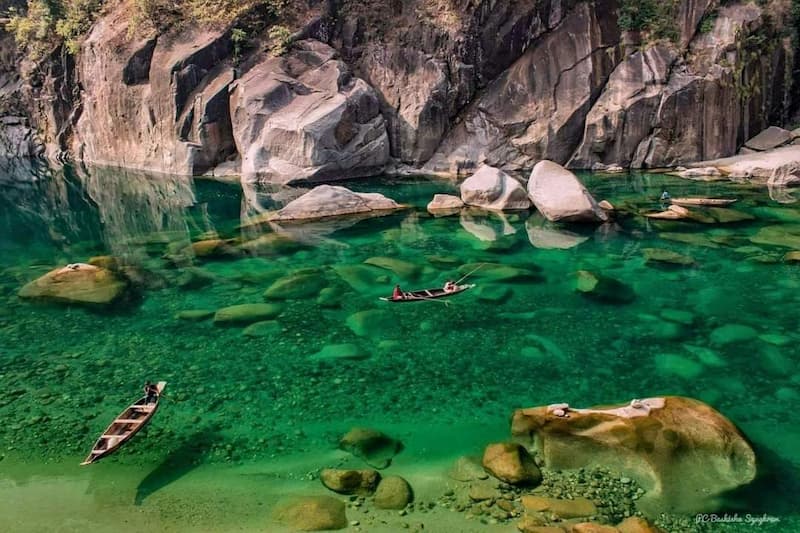
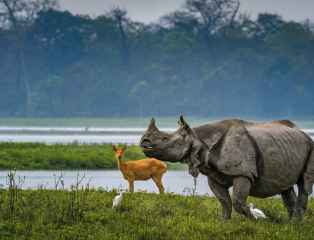
Assam is largely defined by its river plains, particularly around the Brahmaputra. Meghalaya rises into a very different landscape of hills, forests, waterfalls and limestone country. Arunachal Pradesh takes you much higher into mountain terrain, while Nagaland, Mizoram and other hill states have their own ridge-and-valley landscapes.
For a traveller, this is not simply a difference you see from the car window. Geography affects how long you travel, where villages develop, what people grow and eat, how houses are built and how communities have interacted with each other over generations.
It also explains why distances in the Northeast can be misleading. A place may not look very far away on a map, but once the road starts climbing and winding through the mountains, the journey can take considerably longer than the distance suggests.
Even the Mountains Do Not Feel the Same
It is easy to describe Northeast India as a mountainous region, but that description hides a lot of the actual difference.
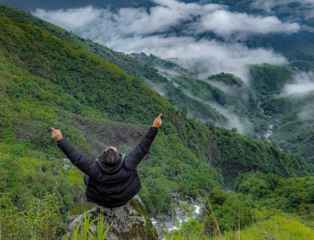
Meghalaya has its own character of hills, forests, waterfalls and deep valleys. Arunachal Pradesh feels much more mountainous, particularly as you travel towards places such as Tawang and other high-altitude regions.
And even Arunachal Pradesh cannot be treated as one destination.
Tawang, Dirang, Sangti, Shergaon, Ziro, Mechuka, Anini, Dong and the many smaller valleys and villages around them can all provide very different experiences. The road, altitude, landscape, culture and pace of travel can change significantly from one part of the state to another.
That is something first-time visitors often discover only after they arrive. A state itself can be too large and diverse to describe through one famous destination.
People and Culture Change With the Landscape
Another major difference travellers notice is the people and the culture.
The Northeast is home to many different communities and tribal groups, each with their own traditions, food habits, languages and cultural practices. Travelling from one state to another can therefore feel like entering a different cultural environment even when the physical distance between the two places is not enormous.
The hospitality can also surprise people.
Before travelling, some visitors arrive with preconceived ideas about particular states or communities. Nagaland is one example where some travellers have expected people to be distant or unwelcoming. After actually spending time there, many come away with a completely different impression.
They experience people as welcoming, hospitable, lively and proud of their culture.
This is one of the things that is difficult to understand from a travel article alone. You can read about the culture of a place, but meeting people, staying there and travelling through their communities gives you a very different perspective.
There Is No Single "Northeast Indian" Food
Food is another area where the differences become obvious.
Every state has its own food habits and local ingredients, shaped by the communities that live there and the environment around them.
Traditional food in several parts of the Northeast includes boiled, smoked, fermented and simply prepared dishes. But that does not mean travellers have to eat only traditional or boiled food throughout their trip.
Tourism has changed considerably. Hotels and restaurants across the region now serve a wide variety of food, including many familiar mainland Indian dishes.
At the same time, travelling through the region gives you the opportunity to try local food that you simply will not find in the same form elsewhere.
That difference matters because food is not just a tourist attraction here. It is part of the everyday culture of each community.
The Travel Experience Changes Too
Not every traveller comes to the Northeast looking for the same thing.
In a group travelling with us, you may have someone who is primarily concerned about the budget, someone who wants a comfortable hotel, someone who is particular about food and someone else who is happy as long as the destination and experience are good.
That is another reason there is no single definition of the "Northeast experience."
Some journeys are more comfortable and accessible. Others involve longer drives, higher mountains and more remote destinations. Some are strongly focused on culture and villages, while others are built around landscapes, wildlife or outdoor activities.
The same traveller can have completely different experiences on two trips to different states.
Roads and Connectivity Are Not the Same Everywhere
The old image of Northeast India as a place where every road is difficult or poorly connected is no longer an accurate way to describe the entire region.
Connectivity has improved significantly, and many routes now have good roads. At the same time, mountain travel still comes with its own realities.
Road conditions can change from one route to another. Some stretches may be smooth while another section can be slower or rougher. Weather, terrain and ongoing road work can also affect travel times.
This is why we usually look at the actual route rather than simply looking at the number of kilometres.
A journey that looks short on a map may still take much of the day in the mountains. Planning a Northeast trip around realistic travel time is much more useful than planning it around distance alone.
One State Can Contain Several Different Journeys
This is particularly obvious in Arunachal Pradesh.
Many people know Arunachal primarily through Tawang. But Tawang is only one part of the state.
You can travel through the Tawang circuit and explore places such as Dirang, Sangti and Shergaon. You can take a completely different journey towards Ziro. You can travel much deeper into the state towards Mechuka or Anini, or explore remote eastern areas such as Dong.
These are not simply different stops on the same itinerary. The landscape, communities, road conditions, altitude and overall character of the journey can be very different.
The same principle applies across the Northeast. A state name does not automatically tell you what the actual experience will be.
Why Travellers Often Understand the Northeast Only After Visiting
There are things about the region that are difficult to understand before you have travelled here.
You can read that the Northeast is culturally diverse. You can read that it has many tribes, languages and traditions. But those words become much more meaningful when you travel from one state to another and actually notice the differences.
You also begin to understand that many assumptions about the region are simply incomplete.
The Northeast is not one remote corner where everyone lives in the same way. There are highly connected towns, modern cities, universities, businesses, music scenes, traditional villages, remote mountain communities and everything in between.
The people are not defined by one personality either. But across many of the places we have travelled, one quality that stands out is how grounded and welcoming people can be.
So What Actually Makes the Eight States Different?
There is no single answer.
It is the combination of terrain, altitude, climate, communities, tribal identities, food habits, history and the way people have lived in their particular environment for generations.
Two states can both be mountainous and still feel completely different.
Two destinations can be within the same state and still offer completely different journeys.
That is why trying to cover the whole Northeast in one rushed trip rarely gives you a proper understanding of the region.
A better approach is to choose a part of the Northeast that matches the kind of experience you want, give it enough time, and then explore it properly.
After travelling and guiding groups across the region, that is probably the simplest way we would explain it at Guide to Northeast:
Northeast India is one region on the map, but it is many different experiences on the ground.
And that is exactly what makes travelling here interesting.