Most first trips to Northeast India go wrong at the planning stage, not on the ground. People book flights into Guwahati first, then find out the permit they need takes a few days to arrange, the national park they wanted is closed for the season, or the two places on their list are a ten-hour drive apart.
This region rewards planning in a particular order: season first, then region, then the number of days, then the route, and only then the flights. This guide walks through that order the way we work through it with travellers on the trips we run, so your itinerary is built on what is actually possible rather than on a map that hides the mountains.
If you are still deciding which state or region to visit, start with The 8 States of Northeast India: Where Should You Go First? and come back here to turn that choice into a workable plan.
Key Takeaways
- Plan in this order: season, then region, then days, then route, then permits and transport, then book flights.
- There is no single best season. October to April suits most popular circuits; the monsoon (June to September) is green and dramatic in Meghalaya but hard on mountain roads.
- Permits are not optional. Indian travellers need an Inner Line Permit for Arunachal Pradesh, Nagaland, Manipur and Mizoram. Sort it before you commit to dates.
- Judge distance by driving time, not kilometres. A 200 km hill leg can take seven hours. Build the itinerary around realistic road time.
- Give one region enough time. Four to five days is one cluster; six to eight days is two connected areas; ten days or more before you seriously combine states.
Start With the Season, Not the Flights
Decide when you can travel before anything else, because the season decides which regions are worth visiting at all.
October to November
The most reliable window for first trips. The monsoon has cleared, skies are generally clearer in the hills, and the popular circuits in Meghalaya, Assam and western Arunachal Pradesh are all open. This is also the busiest period, so vehicles and rooms in places like Sohra, Tawang and Kaziranga get booked well ahead.
December to February
Cold and dry. Good for Assam wildlife and for winter landscapes in high Arunachal Pradesh and Sikkim, with a chance of snow around Sela Pass and North Sikkim. High passes and some roads can close for days after snowfall, so keep the itinerary flexible and avoid tight connections at the end of the trip.
March to May
Spring in the hills, warmer in the plains, with pre-monsoon showers building through May. A good period for Ziro, Nagaland and the Meghalaya hills before the heavy rain arrives.
June to September
The monsoon. Meghalaya turns intensely green and its waterfalls are at their most powerful, which is exactly why some travellers choose this window. The trade-off is real: roads, treks and river activities can change at short notice, and landslides can add hours to a drive. Kaziranga National Park is normally closed through the peak monsoon; opening dates shift with conditions each year, so confirm the current status before you plan around a safari.
If your dates are fixed and fall in the monsoon, plan a Meghalaya-focused trip with buffer days rather than a long multi-state route.
How Many Days You Actually Need
The single most common planning mistake is trying to fit four or five states into a week. Northeast India is not one circuit, and the driving between regions eats the days you were hoping to spend in them.
A workable rule:
- 4 to 5 days: one destination cluster. Meghalaya around Shillong and Sohra, or Kaziranga with a night or two added on.
- 6 to 8 days: two connected areas that share a road. Assam and Meghalaya together, or the Tawang circuit through Dirang.
- 10 to 14 days: now you have room to combine states, or to go deeper into one, reaching quieter places like Ziro, Mechuka or the Jaintia Hills.
For a sense of how the days break down on a real route, see our 7-day Kaziranga and Meghalaya itinerary, which shows where the long drives fall and where it makes sense to stay two nights.
Permits: Sort These Before You Book Anything
Several Northeast states need an entry permit on top of your normal travel documents, and there is no single permit that covers the region.
For Indian citizens, an Inner Line Permit (ILP) is required for Arunachal Pradesh, Nagaland, Manipur and Mizoram. Most are now issued online, for example through the official Arunachal Pradesh e-ILP portal, and take anywhere from a few minutes to a few working days depending on the state and the season. The important part is that your permit has to match your actual route, including the districts and the entry gate, so you cannot finalise it until you have planned where you are going.
For foreign nationals, the rules are different. The domestic ILP system does not apply, and parts of the region fall under the Protected Area Permit framework. If you are travelling on a foreign passport, check the current requirements for your specific route well in advance.
Sikkim has its own separate permit arrangements for several protected areas and border routes, arranged through registered operators or at designated checkposts. The Sikkim Tourism site lists the current protected-area routes.
Our step-by-step Arunachal Pradesh ILP guide covers the online process, current fees, the 14-day validity and the common mistakes in detail. Treat permit timing as a fixed constraint when you choose your travel dates, not as a formality to deal with later.
Getting Around: There Is No Train to Most of It
Rail and air reach the gateway cities, Guwahati, Dibrugarh, Dimapur, Imphal, Agartala, Aizawl and Bagdogra for Sikkim. Almost everything after that is by road.
- Private taxi or tour vehicle: how most organised trips run. One vehicle and driver for the whole route, which matters on long hill days and where public transport is thin.
- Shared Sumo or jeep: the local backbone, cheap and frequent on main routes, fixed departure points and times, limited luggage space, no detours.
- Self-drive: possible on main roads, harder on mountain sections in bad weather, and not always practical near restricted border areas where local knowledge matters.
- Motorcycle: popular for Arunachal Pradesh and Meghalaya loops in the dry season, for riders comfortable with rough surfaces, fuel gaps and long days.
Plan every leg by driving time, not by the number on the map. As a rough guide, and allowing more in poor weather:
| Leg | Approximate driving time |
|---|---|
| Guwahati to Shillong | 3 to 4 hours |
| Shillong to Sohra (Cherrapunji) | 2 to 2.5 hours |
| Guwahati to Kaziranga | 5 to 6 hours |
| Guwahati to Dirang | 9 to 11 hours |
| Dirang to Tawang (via Sela Pass) | 5 to 7 hours |
| Jorhat to Majuli (road plus ferry) | 2 to 3 hours, ferry timings apply |
These are planning references, not guarantees. Traffic through Guwahati, roadwork, weather and the state of a particular stretch all change them.
The Main Routes Most First Trips Follow
Four routes cover the large majority of first visits. Pick one and give it the days it needs.
Meghalaya loop
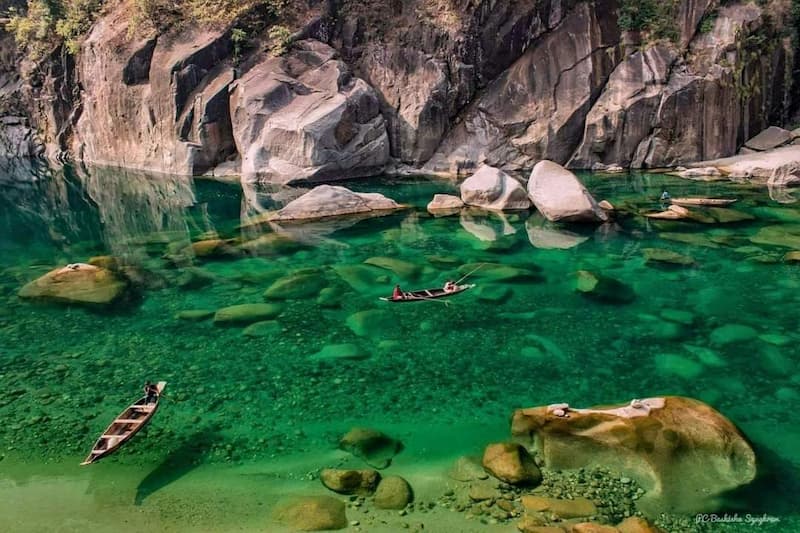
Guwahati to Shillong to Sohra to Mawlynnong to Dawki and Shnongpdeng, and back. Waterfalls, caves, forests and the Umngot River. Around 5 to 7 days. No ILP for Indian travellers. See Meghalaya.
Western Arunachal Pradesh, the Tawang circuit
Guwahati or Tezpur to Bhalukpong to Dirang to Tawang, returning the same way or via Bomdila. High passes, monasteries and border landscapes, with two long driving days built in. Around 6 to 8 days. ILP required for Indian travellers. See Arunachal Pradesh.
Assam and Meghalaya together
Guwahati to Kaziranga to Shillong to Sohra to Dawki, and back. Wildlife plus the Meghalaya hills in one trip. Around 6 to 7 days. See Assam, and the full 7-day itinerary.
Nagaland
Dimapur to Kohima to Khonoma, with the Dzukou Valley trek for those who want it, and the Hornbill Festival in early December. Around 4 to 6 days. ILP required for Indian travellers. See Nagaland.
Manipur, Mizoram, Tripura and Sikkim work well as dedicated trips rather than as add-ons squeezed onto one of the routes above.
Budgeting Without Surprises
We do not publish fixed package prices, because the cost of a Northeast trip is driven by choices that only make sense once the route exists. The main factors:
- Distance covered: the vehicle and fuel are the largest single cost, and they scale with how far the route runs.
- Season: vehicle and room rates rise through the October to April peak, and sharply around the Hornbill Festival and other big dates.
- Group size: the vehicle cost is shared, so a couple pays more per head than a group of six on the same route.
- Permits and park fees: ILP charges, national park entry, camera and safari fees, and any restricted-area permissions.
- Category of stay: simple guesthouses and homestays at one end, boutique and resort properties at the other, with a wide gap between them in the hills.
The practical approach is to fix the route and dates first, then ask for a costing against that specific plan. Send us your dates and rough route and we will build an itinerary and a price around it.
Money, Connectivity and What to Pack
Cash and payments. Towns have ATMs and UPI works in most shops and fuel stations, but coverage thins quickly on the way to places like Mechuka, Anini, Dzukou and the deeper Jaintia Hills. Carry enough cash for two or three days at a time once you leave the main towns.
Mobile network. Coverage is good in the gateway cities and patchy to absent in remote valleys. In Arunachal Pradesh, prepaid connections from other states often do not work well, so a postpaid number or a local arrangement helps. Download offline maps for your route before you leave a city.
Packing, briefly:
- Layered clothing for cold mornings and warm afternoons in the hills
- A warm jacket for anything above Dirang, or for North Sikkim in winter
- A light rain layer in any season
- Comfortable shoes with grip for wet steps and trails
- Any regular medication, with a small buffer
- Printed copies of your ID and permits, in case your phone has no signal at a checkpost
Putting It Together: A Simple Planning Order
- Fix your dates and check what the season allows.
- Choose one region or cluster that matches the season and the kind of trip you want.
- Set the number of days using the ranges above, and be honest about travel time.
- Draw the route as a sequence of overnight stops, not a list of sights.
- Confirm permits for that exact route, and check they can be issued in time.
- Arrange transport and stays, then get a costing against the finished plan.
- Book flights last, once the ground plan is solid.
Done in this order, the trip holds together. Done in reverse, you spend the first week of planning trying to make flights and a wishlist fit a region that will not bend to them.
Plan Your Trip
If you would rather hand the routing, permits and logistics to someone who runs these trips regularly, tell us your dates, the region you are leaning towards and how many days you have. We will send back a route, a day-by-day outline and a costing. Start planning your Northeast India trip.
Frequently Asked Questions
What is the best month to visit Northeast India?
For a first trip, October and November are the most reliable across the region: the monsoon has passed, the hills are clearer, and the popular circuits are open. December to February suits winter landscapes and Assam wildlife, with the risk of snow closing high passes. If your dates fall in the monsoon, plan a Meghalaya-focused trip with buffer days.
How many days do I need for a first Northeast India trip?
Plan four to five days for a single cluster such as Meghalaya around Shillong and Sohra, six to eight days for two connected areas such as Assam and Meghalaya or the Tawang circuit, and ten days or more before you seriously try to combine states. Trying to see four or five states in a week means spending most of it in the car.
Do I need a permit to travel in Northeast India?
Indian citizens need an Inner Line Permit for Arunachal Pradesh, Nagaland, Manipur and Mizoram. Meghalaya, Assam and Tripura do not require one for Indian travellers. Sikkim has separate permits for protected areas. Foreign nationals have different rules, including the Protected Area Permit framework in parts of the region. See our Arunachal Pradesh ILP guide for the process.
Can I self-drive in Northeast India?
Yes on the main roads, with care. Mountain sections are slow and can be rough or blocked in bad weather, fuel stops are spread out, and near restricted border areas a local driver who knows the checkposts and current conditions is a real advantage. Most organised trips use a private vehicle and driver for this reason.
Is Northeast India safe for tourists?
The routes covered in this guide, across Meghalaya, Assam, western Arunachal Pradesh and Nagaland, are travelled by tourists throughout the season without issue. The practical risks are road conditions, weather and altitude rather than anything else. Check current local advisories for any specific area before you travel, keep your permits and ID on you, and build flexibility into the last day or two of the trip.
How far in advance should I book?
For travel between October and April, and especially around the Hornbill Festival in early December, arrange your vehicle, rooms and permits several weeks ahead. Tawang, Sohra and Kaziranga fill up first. Off-peak, a couple of weeks is usually enough, though permit processing time still sets the floor.