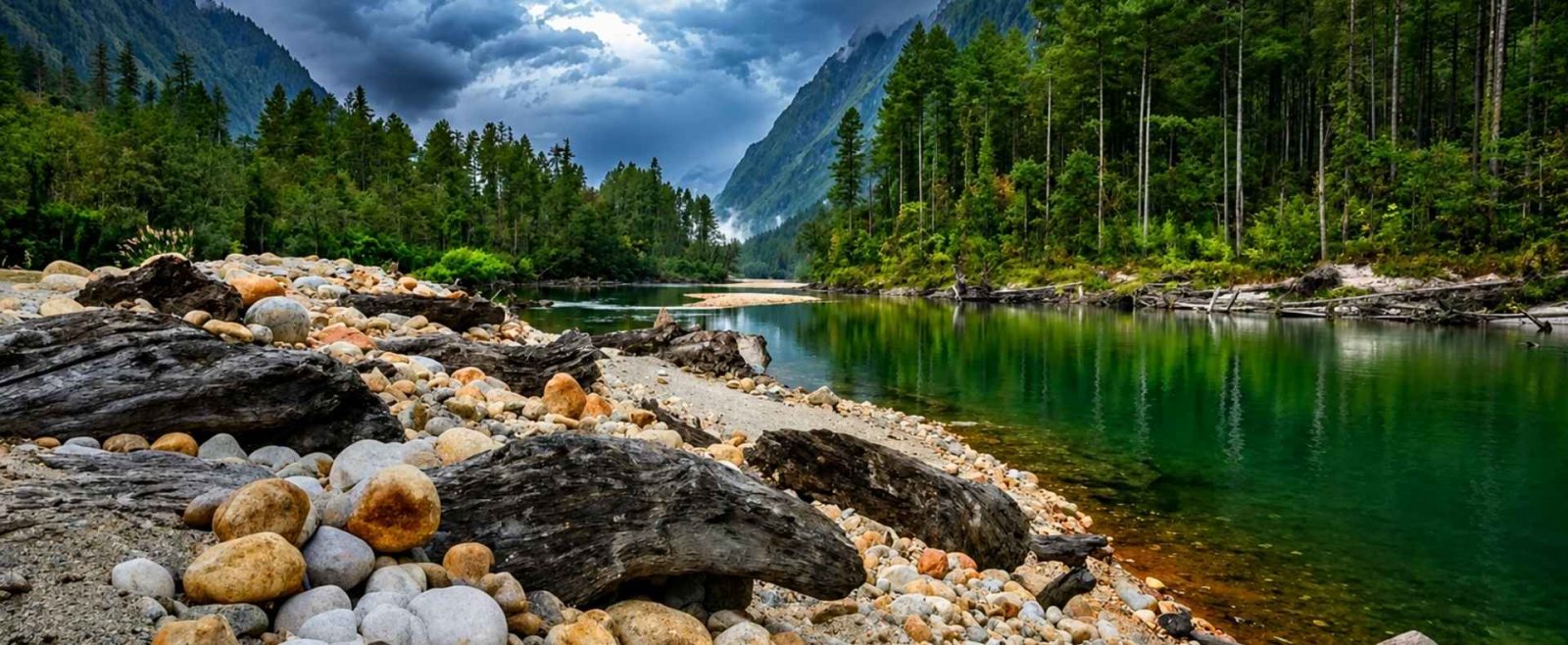
Seven days is enough to experience both Assam and Meghalaya, but you need to accept one thing upfront: this is a road trip, not a slow holiday.
You will cover wildlife, waterfalls, caves, forests, villages, rivers and the Jaintia Hills, with several hours on the road between them. The route below keeps the journey moving in one direction as much as possible, while giving you two nights in Sohra and a night in Shnongpdeng instead of treating every place as a rushed stop.
For a first trip covering Assam and Meghalaya together, this is a practical seven-day route.
7-Day Route at a Glance
| Day | Route | Overnight |
|---|---|---|
| Day 1 | Guwahati → Kaziranga | Kaziranga |
| Day 2 | Kaziranga → Shillong | Shillong |
| Day 3 | Shillong → Mawphlang / Laitlum → Sohra | Sohra |
| Day 4 | Sohra Local & Leisure | Sohra |
| Day 5 | Sohra → Mawlynnong → Shnongpdeng | Shnongpdeng |
| Day 6 | Shnongpdeng → Krang Suri → Jowai → Shillong | Shillong |
| Day 7 | Shillong → Guwahati | Departure |
Day 1: Guwahati → Kaziranga
Your trip begins in Guwahati.
After pickup from Guwahati Airport or Railway Station, drive towards Kaziranga National Park. This is one of the longer road legs of the trip, so keep the first day simple rather than trying to add several sightseeing stops.
Reach Kaziranga, check into your accommodation and keep the evening free.
If you are arriving in Guwahati late in the day, it is worth adjusting your starting schedule rather than trying to rush to Kaziranga at night.
Overnight: Kaziranga
Day 2: Kaziranga → Shillong
Start the morning with a jeep safari in Kaziranga National Park.
Kaziranga is best known for its one-horned rhinoceros, but the park is also home to elephants, wild buffalo, deer and a wide variety of birds. Wildlife sightings are never guaranteed, so the safari should be treated as an experience rather than a checklist.
After the safari, return for breakfast, check out and begin the journey towards Shillong.
This is another substantial driving day. By the time you reach Shillong, the landscape has changed completely from the plains of Assam to the hills of Meghalaya.
Check in and keep the evening relaxed.
Overnight: Shillong
Day 3: Shillong → Mawphlang / Laitlum → Sohra
Today you leave Shillong and head towards Sohra. There are two good ways to use your first stop, depending on what interests you more.
Option 1: Mawphlang Sacred Forest
Choose Mawphlang Sacred Forest if you are interested in Khasi culture, traditional beliefs and forests.
The forest is protected by the local Khasi community, and walking through it with a local guide gives you a very different experience from simply visiting another viewpoint or waterfall.
Option 2: Laitlum Canyons
Choose Laitlum Canyons if landscapes and viewpoints are more your priority.
The canyon overlooks deep green valleys and gives you a completely different perspective of Meghalaya's terrain.
You do not have to force both into the same morning. Pick the one that suits your interests and available time.
Continue towards Sohra.
Once in Sohra, visit Nohkalikai Falls and Garden of Caves, depending on the day's timing and weather, before checking in.
Overnight: Sohra
Day 4: Sohra Local & Leisure
This is where the extra night in Sohra becomes useful.
Instead of checking out and moving again, you have an entire day to explore the area at a manageable pace.
The Relaxed Option
Visit:
- Seven Sisters Falls
- Mawsmai Cave
- Mawlynnong Falls, if time allows
The Active Option
Dedicate the day to the Nongriat Living Root Bridge trek.
This is not a casual walk. It involves a substantial descent and climb through hundreds of steps. If you choose the trek, treat it as the main experience of the day rather than squeezing it between other attractions.
If you prefer a relaxed day, stay around Sohra and explore the waterfalls, caves and surrounding viewpoints instead.
Keeping this day flexible lets you match the experience to your energy levels, weather and interests.
Overnight: Sohra
Day 5: Sohra → Mawlynnong → Shnongpdeng
After breakfast, leave Sohra and drive towards Mawlynnong.
Explore the village and visit the nearby Living Root Bridge before continuing towards Shnongpdeng.
The scenery changes again as you move towards the Umngot River and the Jaintia Hills region.
Reach Shnongpdeng and spend the rest of the day around the river and village.
The experience here is less about ticking off attractions and more about slowing down for a while after several days of road travel.
Overnight: Shnongpdeng
Day 6: Shnongpdeng → Krang Suri → Jowai → Shillong
After breakfast, start towards the Jowai side.
Your first major stop is Krang Suri Falls, one of the best-known waterfalls in the Jaintia Hills.
Spend some time around the waterfall before continuing towards Jowai.
From Jowai, continue towards Shillong.
This is an important part of the route because you are not simply retracing your journey back through the same places. You get to see another part of Meghalaya before returning to Shillong for the final night.
Depending on road conditions and the time spent at Krang Suri, this should be treated as a proper travel day rather than one where you keep adding extra stops.
Overnight: Shillong
Day 7: Shillong → Guwahati
Keep the final day simple.
Depending on your departure time, use the morning to explore a little more of Shillong.
Possible options include:
- Don Bosco Museum
- Shillong Peak
- Ward's Lake
Do not try to squeeze in too much if you have an early flight or train.
After your morning exploration, begin the drive towards Guwahati and continue to Guwahati Airport or Railway Station for your onward journey.
Why This Route Works
The route forms a practical loop:
Guwahati → Kaziranga → Shillong → Sohra → Mawlynnong → Shnongpdeng → Krang Suri → Jowai → Shillong → Guwahati
The key is not simply the number of places covered. It is the way the nights are distributed.
- 1 night in Kaziranga for the wildlife experience
- 1 night in Shillong before moving into Sohra
- 2 nights in Sohra so you can actually explore the area
- 1 night in Shnongpdeng rather than making it a rushed stop
- 1 final night in Shillong before returning to Guwahati
That makes the route busy, but still workable.
Realistic Expectations: What You Will and Will Not Get
What You Will Get
A well-rounded introduction to two very different parts of Northeast India: wildlife in Assam and hills, waterfalls, caves, forests, living root bridges, villages and rivers in Meghalaya.
What You Will Not Get
You will not see every major attraction in Assam and Meghalaya in seven days.
You will also not have long, lazy mornings every day.
Trying to add places such as Majuli, additional Assam tea estates or several more Meghalaya attractions would turn this into a checklist rather than a good road trip.
The better approach is to accept the limits of seven days and enjoy the route you have chosen.
Best Time for This Trip
The ideal timing depends on which part of the trip matters most to you.
- October to November: Generally a good period for comfortable road travel and outdoor sightseeing.
- December to February: Cooler and drier, although mornings and evenings in the hills can be cold.
- March to May: Warmer conditions with the possibility of pre-monsoon showers as the season progresses.
- Monsoon: Meghalaya receives heavy rainfall. Waterfalls can be spectacular, but road conditions and trekking conditions can change quickly.
Kaziranga's operating season is also important. Safari operations are seasonal and the park normally closes during the peak monsoon period, so check the current opening status before confirming a combined Assam-Meghalaya itinerary.
If the main attraction for you is the clear-water experience around Shnongpdeng, the drier months are generally more suitable.
How Much Driving Should You Expect?
This is a road trip, and the map can be misleading.
Mountain roads in Meghalaya and Northeast India cannot be judged purely by kilometres. Traffic, road conditions, weather and winding hill roads can make relatively short distances take considerably longer than expected.
The major legs are roughly:
- Guwahati → Kaziranga: around 200+ km
- Kaziranga → Shillong: around 240 km
- Shillong → Sohra: around 50–60 km
- Shnongpdeng → Krang Suri → Jowai → Shillong: roughly 125–135 km
Treat these as planning references rather than guarantees. Actual travel time can vary considerably.
A Few Practical Things to Know
Keep Day 4 Flexible
The Sohra day is deliberately flexible.
A family looking for an easier day can explore the waterfalls and caves.
A more active group can make the Living Root Bridge trek the main experience.
That flexibility is one of the reasons staying two nights in Sohra makes sense.
Keep a Smaller Bag for Shnongpdeng
You do not need to carry every piece of luggage everywhere.
For the Shnongpdeng stay, keeping your essentials in a smaller overnight bag can make the transfer much easier, particularly if your accommodation is close to the river.
Don't Judge Meghalaya by Distance Alone
A 50-km journey on a map does not necessarily mean a quick one.
Build your day around realistic road travel rather than trying to calculate everything purely from kilometres.
Check Seasonal Conditions Before Departure
Weather can affect waterfalls, caves, trekking conditions and road travel.
The same itinerary can feel completely different in the dry season and during the monsoon.
Permits and Entry Requirements
For a standard domestic tourist trip covering Assam and Meghalaya, Indian travellers do not need an Inner Line Permit (ILP).
If you are a foreign national, your Indian visa and applicable entry requirements are a separate matter and should be checked according to your nationality and current Indian immigration rules.
For activities or restricted areas that have separate local permissions, check the current requirements before travelling.
Frequently Asked Questions
Is 7 days enough for Assam and Meghalaya?
Yes. Seven days is enough for a good first introduction to both states if you keep the route focused. It is not enough to see everything.
Can I skip the Living Root Bridge trek?
Yes. It is completely optional. Day 4 can instead be used for a more relaxed Sohra sightseeing day.
Should I choose Mawphlang or Laitlum?
Choose Mawphlang if you prefer forests, culture and local traditions. Choose Laitlum if you prefer dramatic landscapes and viewpoints.
Why stay two nights in Sohra?
Sohra deserves more than a quick stop. Two nights allow you to explore the major sights and still have the option of doing the Living Root Bridge trek without constantly packing and changing hotels.
Why return to Shillong on Day 6?
It keeps the final day manageable. Instead of attempting a long Shnongpdeng-to-Guwahati journey immediately before your flight or train, you return to Shillong and have a smoother transfer to Guwahati on Day 7.
Is this itinerary suitable for families?
Yes, provided everyone is comfortable with the driving involved. The Living Root Bridge trek is physically demanding, so families can choose the easier Sohra sightseeing option instead.
Final Takeaway
This is not a slow seven-day holiday.
It is a well-rounded Assam and Meghalaya road trip designed to give you a taste of wildlife, hills, waterfalls, caves, forests, villages, rivers and the Jaintia Hills without trying to squeeze every famous attraction into one week.
If you are visiting Northeast India for the first time and want to combine Kaziranga with Meghalaya, this is a practical route to start with.
Plan Your Trip
- Explore Assam & Meghalaya Tour Packages →
- Plan a Custom Northeast Itinerary →
- Read our Kaziranga Safari Guide →
- Explore our Meghalaya Travel Guides →